
How to Propagate Houseplants: A Beginner's Guide to Free Plants
Turn one plant into many with our step-by-step propagation guide. Learn water propagation, soil propagation, and division methods for popular houseplants.
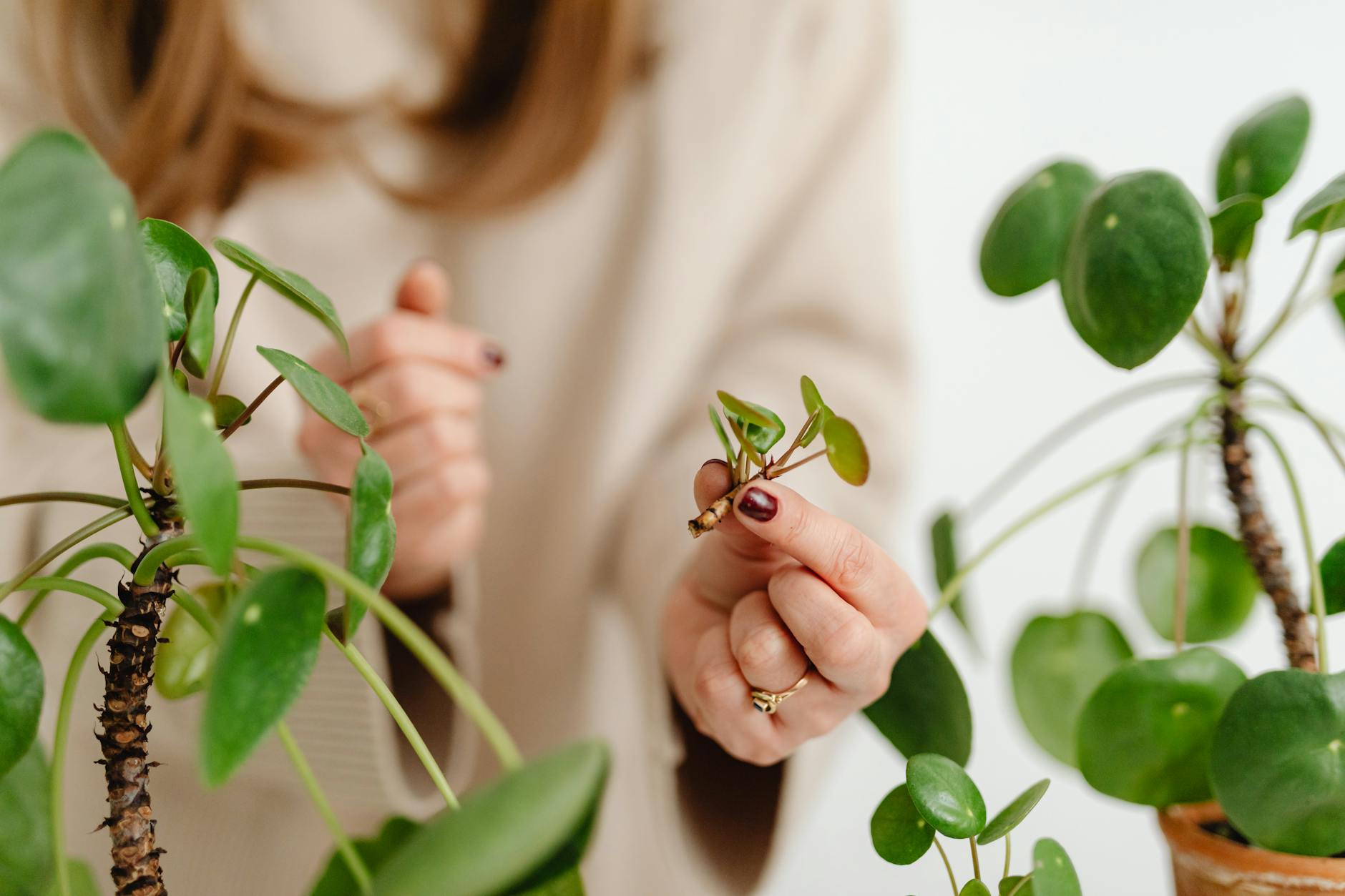
Propagation is one of the most rewarding skills a plant parent can learn. It’s essentially cloning — taking a piece of an existing plant and growing a brand new one from it. The best part? It’s free, and it’s much easier than you might think.
Why Propagate?
- Save money — grow your collection without buying new plants
- Share with friends — homegrown plant gifts are thoughtful and personal
- Rescue struggling plants — propagate healthy parts of a declining plant
- Control plant size — trim overgrown plants and root the cuttings
- Learn and experiment — it deepens your understanding of how plants grow
The Three Main Methods
1. Water Propagation
The most beginner-friendly method. You literally watch roots grow.
Best for: Pothos, philodendron, monstera, tradescantia, begonia, English ivy
Steps:
- Take a cutting — cut a 4-6 inch stem just below a leaf node (the bump where a leaf meets the stem)
- Remove lower leaves — strip leaves from the bottom 2-3 inches
- Place in water — use a clean glass jar with room-temperature water
- Position correctly — at least one node should be submerged
- Find a bright spot — bright, indirect light speeds root growth
- Change water weekly — prevents bacteria buildup
- Wait for roots — most plants develop roots in 2-4 weeks
- Transfer to soil — once roots are 2-3 inches long, pot in fresh soil
Pro tips:
- Use clear glass so you can watch root development
- Don’t use too large a container — a simple jar works perfectly
- If water gets cloudy before your weekly change, change it sooner
- Some people add a tiny amount of liquid fertilizer to speed growth
2. Soil Propagation
Some plants root better directly in soil, and the transition shock is eliminated.
Best for: Succulents, snake plant leaf cuttings, peperomia, hoya, African violets
Steps:
- Prepare a small pot with moist (not wet) potting mix
- Take your cutting — same as water propagation, cut below a node
- Optional: dip in rooting hormone — increases success rate
- Make a hole in the soil with a pencil or finger
- Insert the cutting — bury 1-2 nodes in the soil
- Firm the soil gently around the stem
- Cover with a bag (optional) — creates a humidity dome to reduce moisture loss
- Keep soil moist — mist regularly but don’t soak
- Test for roots — gently tug after 3-4 weeks; resistance means roots have formed
Pro tips:
- Perlite-heavy mixes work great for propagation
- Bottom heat (like a seedling heat mat) speeds root development
- Don’t place in direct sun — the cutting has no roots to take up water
3. Division
The fastest method — you get an established plant instantly.
Best for: Snake plants, ZZ plants, peace lilies, calatheas, spider plant babies, ferns
Steps:
- Water the plant thoroughly the day before dividing
- Remove from pot — gently slide the root ball out
- Identify natural divisions — look for separate clumps with their own roots
- Separate carefully — use your hands to gently tease apart. Use a clean knife only if necessary
- Pot each division in appropriately sized pots with fresh soil
- Water well and place in bright, indirect light
- Be patient — divisions may droop for a week while they recover
Plant-by-Plant Propagation Guide
| Plant | Best Method | Difficulty | Time to Root |
|---|---|---|---|
| Pothos | Water | Easy | 2-3 weeks |
| Monstera | Water or Air Layer | Easy | 3-5 weeks |
| Snake Plant | Division or Leaf | Easy | 4-8 weeks (leaf) |
| Spider Plant | Plantlets | Very Easy | 1-2 weeks |
| Philodendron | Water | Easy | 2-3 weeks |
| ZZ Plant | Division | Easy | Instant |
| Jade Plant | Stem/Leaf | Moderate | 3-4 weeks |
| Aloe Vera | Offsets | Easy | Instant |
| String of Pearls | Soil | Moderate | 2-3 weeks |
| Begonia | Water or Leaf | Moderate | 3-4 weeks |
Common Propagation Mistakes
Using Dull or Dirty Tools
Always use sharp, clean scissors or pruning shears. Dull cuts crush stems, making it harder for roots to form. Dirty tools can introduce bacteria.
Cutting in the Wrong Place
The node is everything. Without a node, most cuttings can’t produce roots. Make sure at least one node is included in your cutting.
Too Much Direct Sun
Cuttings without roots can’t take up enough water to handle direct sunlight. Keep them in bright, indirect light until established.
Forgetting to Change Water
Stagnant water breeds bacteria that can kill your cutting. Change it at least weekly.
Being Impatient
Some plants root quickly; others take months. Snake plant leaf cuttings, for example, can take 2-3 months. Don’t give up.
When to Propagate
The best time to propagate is during the active growing season — spring and summer. Plants have more energy for root development when they’re already in growth mode. Avoid propagating in winter when most plants are dormant.
Get Started Today
Propagation is a skill that improves with practice. Start with easy plants like pothos or spider plants, and you’ll be confidently propagating your entire collection in no time.
For more detailed propagation instructions, check out our plant propagation guide.