
Collection
Bathroom Plants: Matching Humidity Needs to a Small or Frosted Window
Ferns, calatheas, anthuriums and other humidity lovers for a bathroom, picked for the light a small or frosted window gives, each linked to its full care guide.
- plant collections
- bathroom plants
- humidity loving
- bathroom decor
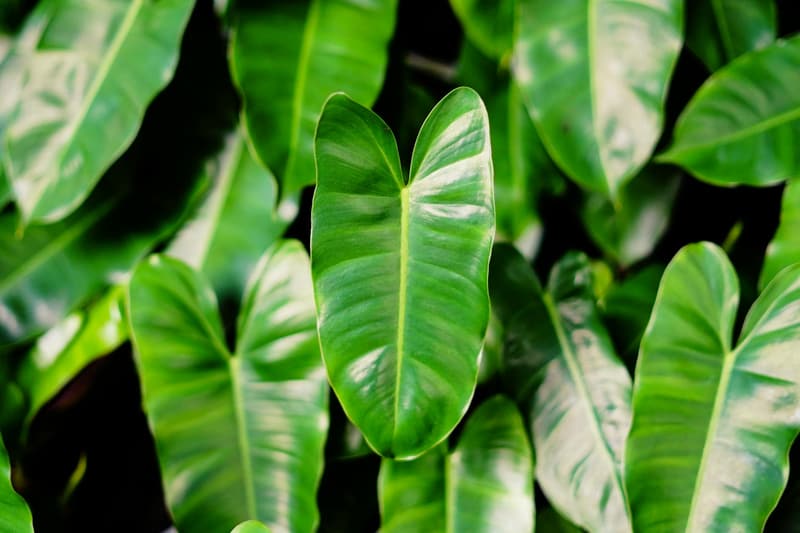
Every plant here wants more humidity than a heated living room gives and none of them needs direct sun, which is why a bathroom with a small or frosted window can suit them. What none of them wants is a dark room. Humidity is the bathroom’s advantage; light is usually what it lacks. So check the light first. It decides which of these 14 will grow there and which will only hang on.
How the listed plants compare
Humidity and light are from each plant’s care page. “Frosted or small window” assumes the plant sits within about 1 m (3 ft) of the glass. A “bright” bathroom here means a soft but visible hand shadow at midday; “medium” means a faint one.
| Plant | Humidity it wants | Light it needs | Frosted or small window? | Pets |
|---|---|---|---|---|
| Calathea Orbifolia | 60% or higher | Bright indirect or part shade | Medium is enough; the best bathroom candidate | Non-toxic |
| Prayer plant | 50%+ keeps tips clean | Bright indirect; tolerates medium | Medium is enough | Non-toxic |
| Bird’s nest fern | Above average | Medium to bright; north or east | Medium is enough | Non-toxic |
| Boston fern | 40-50% ideal; 30% is about the floor | Medium-bright; east window ideal | Medium is enough | Non-toxic |
| Calathea | 50%+, 60%+ for thin-leaved types | Bright indirect | Bright bathroom only | Non-toxic |
| Calathea ‘White Fusion’ | 60% or higher | Bright, filtered | Bright only; the white patches need light | Non-toxic |
| String of turtles | Average to high | Bright indirect; low light fades the pattern | Bright only; small enough for a shelf | Non-toxic |
| Anthurium | 50%+ | Bright indirect, about 1,000 lux to flower | Leaves cope; flowers only in a bright one | Toxic |
| Begonia | 50%+ for rex; cane types tolerate less | Bright indirect | Bright only | Toxic |
| Alocasia | Medium to high; dry air invites mites | Bright indirect; strong sun scorches | Bright only | Toxic |
| Syngonium | Average to high | Bright indirect; full sun bleaches | Bright; pink and silver types need the most | Toxic |
| Monstera adansonii | High preferred; thin leaves crisp | Bright indirect | Bright only; can trail from a shelf | Toxic |
| Monstera deliciosa | High preferred | Bright indirect | Bright only, and only a large bathroom | Toxic |
| Monstera Thai Constellation | High preferred | More than a green Monstera | Poor unless the window is large and bright | Toxic |
Choosing for your bathroom
- Measure the light first. At midday, hold your hand 30 cm (1 ft) above where the plant would sit. No visible shadow means low light, and nothing on this list will grow there; see the low-light collection or add a grow light. A faint shadow is medium: the two ferns, Calathea orbifolia and the prayer plant. A soft but clear shadow opens up the rest. The light requirements guide explains the test and what each window direction gives.
- Then measure the humidity. Put a cheap hygrometer where the plant will go and read it a few hours after a shower, not during one. If it reads much like the rest of the house, the room is not humid; it only has humid moments.
- Match the two. Bright and humid between showers: a calathea, ‘White Fusion’ or a Monstera adansonii. Humid but only medium light: orbifolia, the prayer plant or a bird’s nest fern. Bright but no more humid than elsewhere: a Boston fern, a cane begonia or a syngonium, which tolerate average air better than the rest.
- Check the space. NC State gives Monstera deliciosa 6-8 ft indoors with 2-4 m (6-12 ft) of spread (NC State Extension). That rules it out of most bathrooms; Monstera adansonii or string of turtles fit a shelf instead.
- If you have pets, choose from the seven non-toxic plants: the ferns, the calatheas, the prayer plant and string of turtles.
Some humidity-tolerant plants sold as bathroom plants are not on this list: golden pothos, Aglaonema, Chinese evergreen and dracaena manage dim light but are happy in average room air, so a bathroom gives them nothing extra. Croton likes the humidity but needs some direct sun to keep its colour, which a frosted window rarely gives.
Why a bathroom helps these plants in winter
Purdue Extension puts the air in a heated home in winter at around 10-15% relative humidity (Purdue Extension). NC State gives at least 60% for Goeppertia orbifolia, the calathea most sold as orbifolia (NC State Extension), and lists high humidity as a preference for Monstera adansonii, whose thin leaves crisp fast in dry air (NC State Extension). A bathroom used every day narrows that gap more than misting does. Wisconsin Extension adds that Boston fern cultivars ‘Dallas’ and ‘Whitmanii’ tolerate lower humidity than the floppy ‘Bostoniensis’ sold in porch baskets (UW-Madison Extension).
Humidity also keeps spider mites down. The RHS notes they thrive in a dry atmosphere and that Alocasia likes medium to high humidity (RHS), so for an Alocasia that gets mites every winter in the living room, a bright bathroom is one of the fixes its care page suggests.
Bathroom-specific cautions
- Cold glass. A bathroom window is often single-glazed or left open to clear steam. The RHS says Alocasia should never go below 10°C (50°F), and Missouri Botanical Garden says the prayer plant prefers temperatures that don’t dip below 60°F (15°C) (MBG). Keep plants off the sill on winter nights.
- An Alocasia that drops its leaves in winter may be dormant, not dying. Check that the corm is firm before you throw it out; the Alocasia page has the check.
- Water sitting in a crown. Shower spray that pools in the bird’s nest fern’s rosette invites bacterial spots on a cool night, and Illinois Extension warns that prayer plant stems rot easily when water stands on the crown. Water the soil around the plant, not into the centre.
- Wet soil that never dries. Humid air slows drying. String of turtles is the one most easily lost this way: it wants humidity but rots in a big pot of wet mix, so keep it in a small pot with extra perlite. If any pot stays wet for weeks, see overwatering.
- Tap water and the marantas. Humidity won’t stop leaf-edge burn from hard or treated water on calatheas and the prayer plant, which is fluoride-sensitive. Their care pages cover using rain, distilled or RO water.
Frequently asked questions
Is a bathroom humid enough for a calathea?
Only if it stays humid between showers. Thin-leaved calatheas such as orbifolia want 60% or more, and shower steam clears quickly once the fan runs or a window opens. Put a hygrometer next to the plant for a few days before deciding; if it sits near the rest of the house's reading, a calathea will crisp there too.
Can plants live in a bathroom with no window?
Not for long on the ceiling light alone, which is off most of the day. A windowless bathroom needs an LED grow light on a timer for about 12 hours a day, or a rotation where the plant spends most of its time in a brighter room.
Which bathroom plants are safe for cats and dogs?
Of the 14 plants on this page, the Boston fern, bird's nest fern, prayer plant, string of turtles and the three calatheas (including orbifolia and 'White Fusion') are listed as non-toxic by the ASPCA. Alocasia, anthurium, begonia, syngonium and all three Monsteras are toxic.
What can I grow in a dim bathroom?
Nothing on this list does well with no visible shadow at midday. The most tolerant are the Boston fern, bird's nest fern, Calathea orbifolia and prayer plant, which manage medium light. For a darker room, choose from the low-light plants instead, or add a grow light.
Do I need to water bathroom plants less often?
Usually a little less, because humid air slows evaporation from the leaves and the pot. Don't change the schedule on assumption: check the soil the way each plant's care page describes, since a fern or calathea still needs evenly moist mix.
Plants in this collection
14 plants that want above-average humidity and don’t need direct sun.
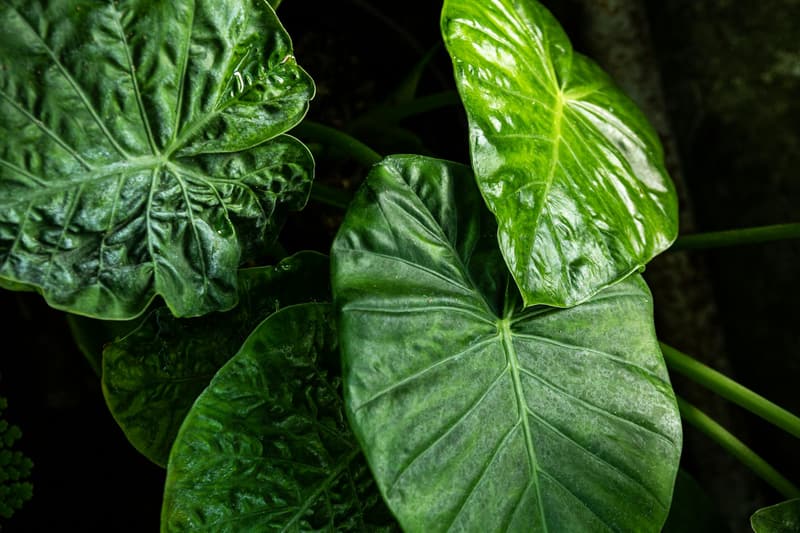
Alocasia Care
An Alocasia dropping every leaf in winter is usually dormant, not dead. Check the corm, keep it above 10°C (50°F) and watch for the spider mites it attracts.
Care guide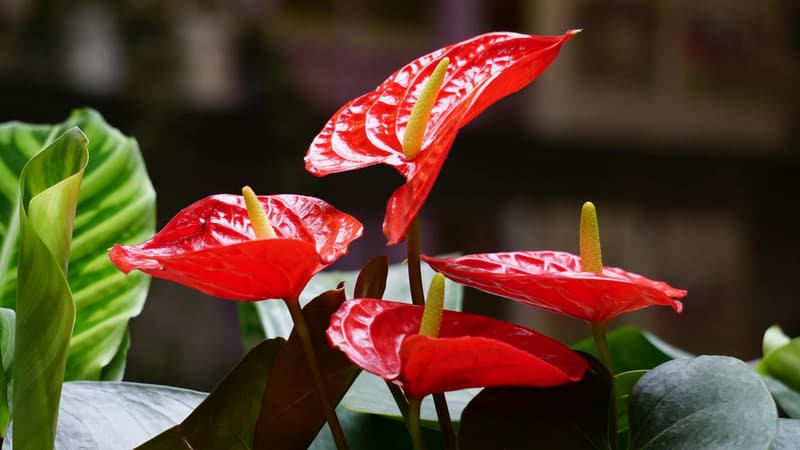
Anthurium Care
Anthurium roots evolved clinging to bark, so dense soil suffocates them. Each new leaf can bring a flower: keep leaves coming with the right mix and light.
Care guide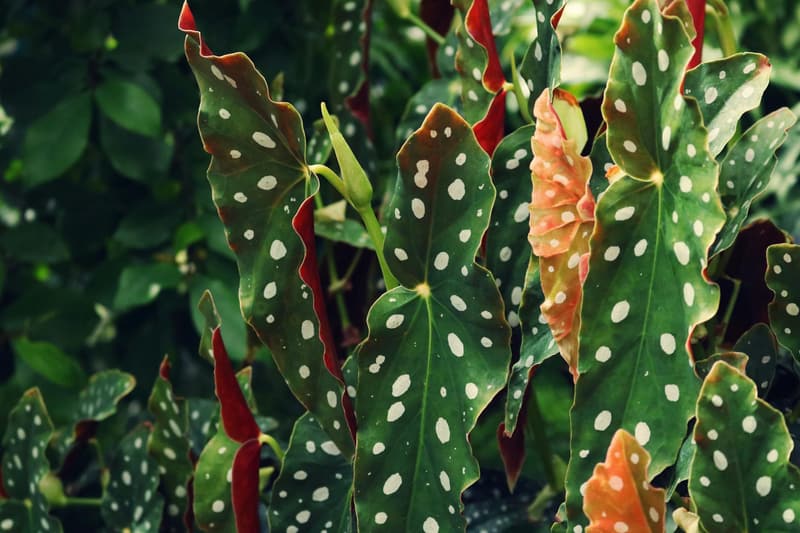
Begonia Care
Cane, rex and rhizomatous begonias differ in humidity, pruning and propagation. Identify yours, keep powdery mildew off the leaves, and keep tubers from pets.
Care guide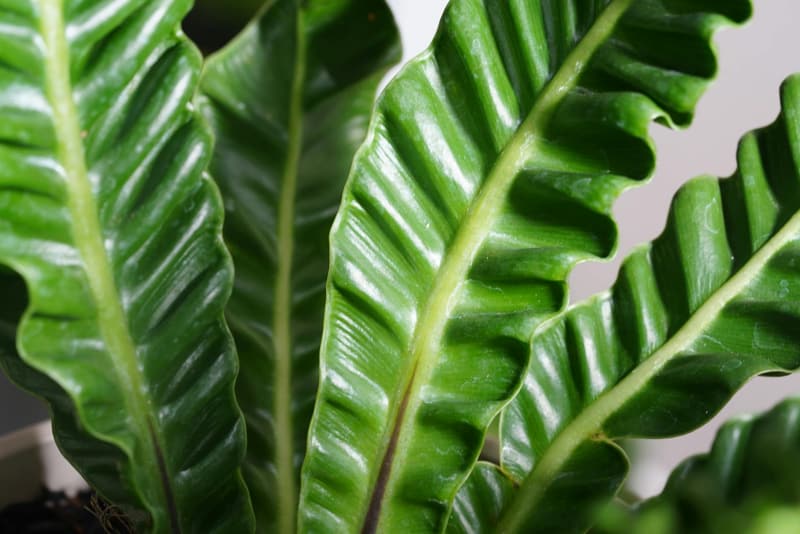
Bird's Nest Fern Care
In the wild, Asplenium nidus grows on tree trunks and composts the leaves that fall into its rosette. Why that means an airy mix, gentle hands and no harsh sprays.
Care guide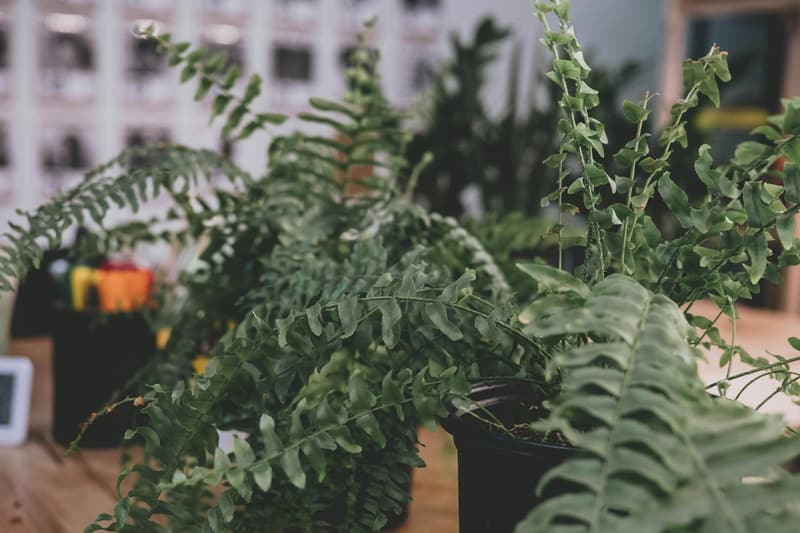
Boston Fern Care
Winter heating can drop indoor humidity to 10–15%; a Boston fern wants 40–50%. Closing that gap, reading leaf shedding and overwintering a porch fern inside.
Care guide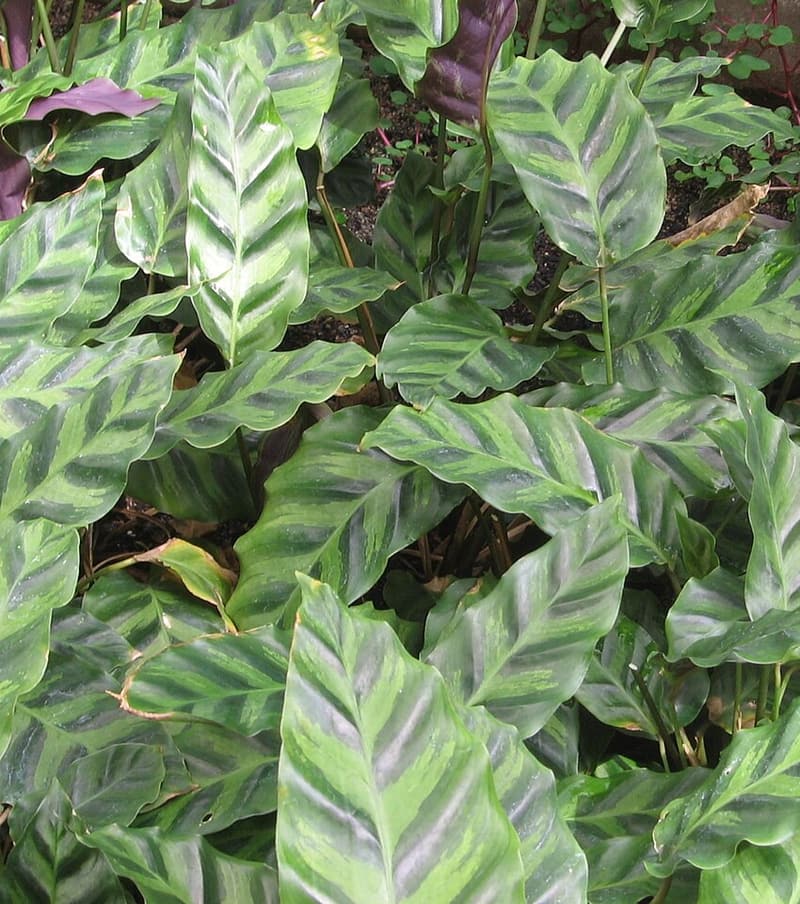
Calathea 'White Fusion' Care
No two 'White Fusion' leaves match, and the white areas burn and brown first. Where the plant came from, how much light it takes, and why it never dries out.
Care guide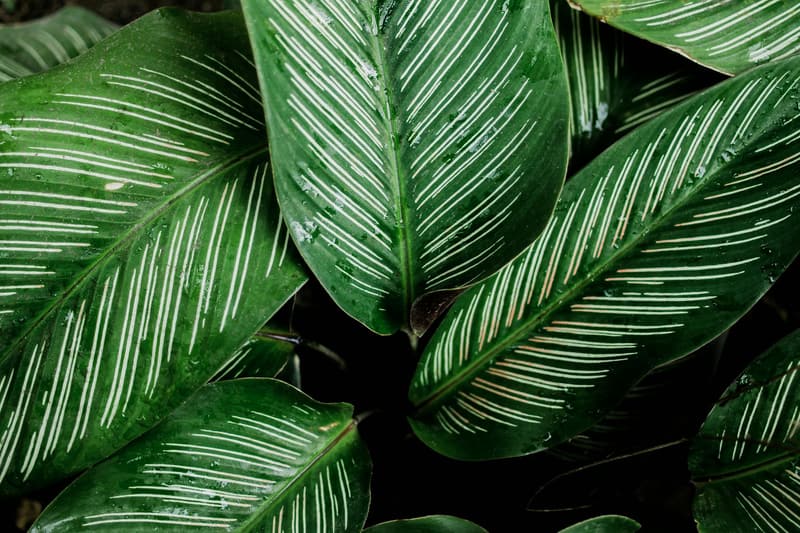
Calathea Care
Crispy calathea edges usually trace back to tap water or dry winter air, not light. Which water to use, how to read curling, and which species are easiest.
Care guide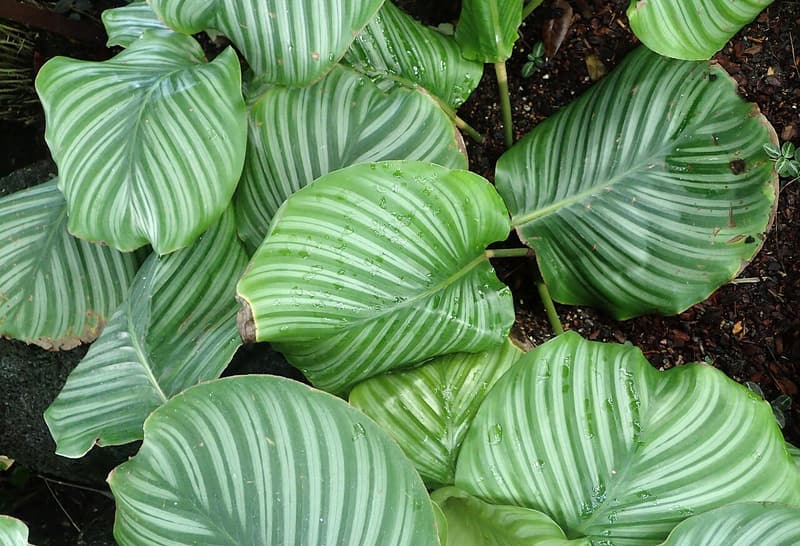
Calathea Orbifolia Care
Orbifolia leaves reach 30 cm across and need 60% humidity or more. A setup that holds it, how to water without leaf spot, and how to divide the clump.
Care guide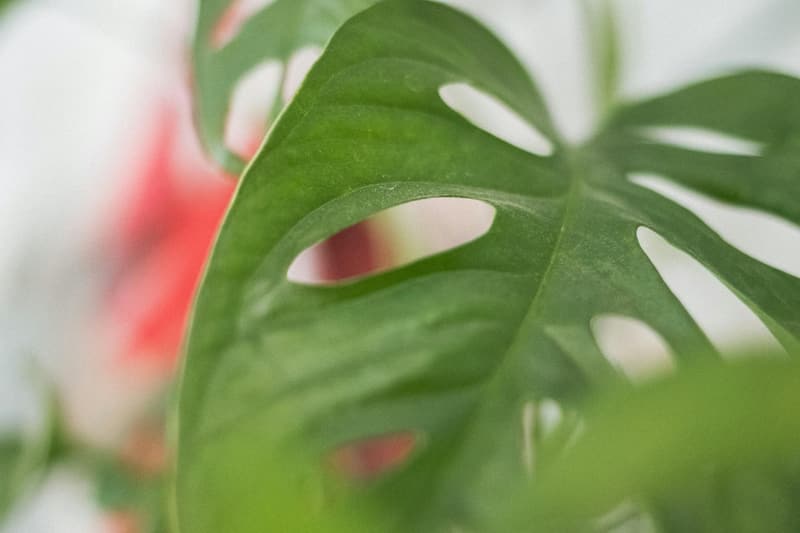
Monstera Adansonii Care
Unlike its big cousin, Monstera adansonii has holes even on small leaves. The real problems are bare stems, crispy thin leaves and mites. A fix for each.
Care guide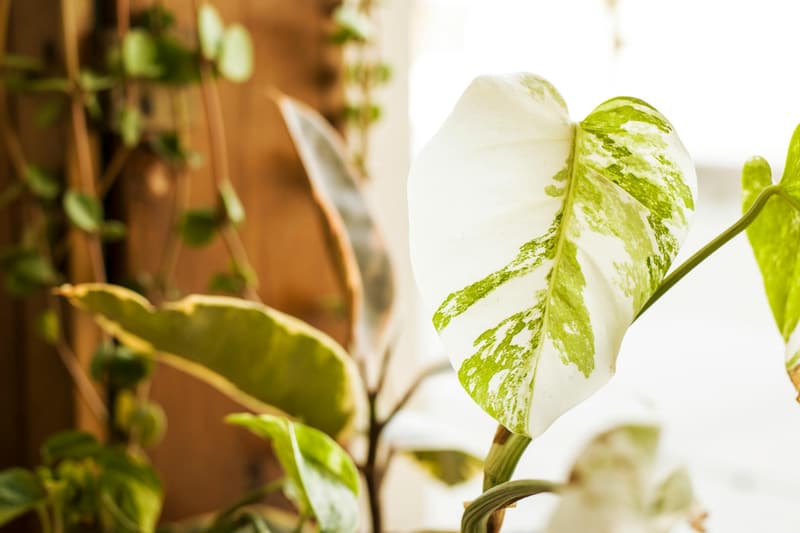
Monstera Deliciosa Care
Only mature Monstera leaves get holes, and maturity comes from light and a stem that climbs. Reading juvenile leaves, setting up a moss pole, watering by depth.
Care guide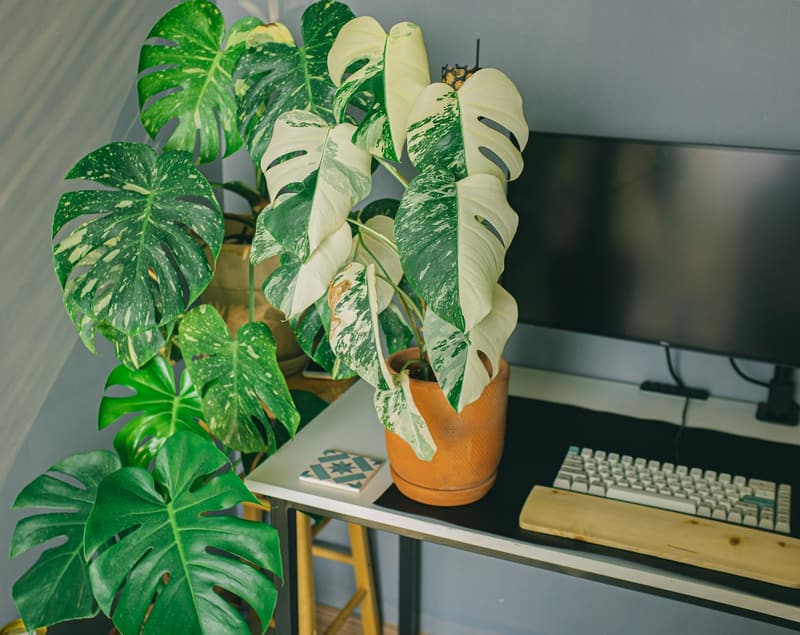
Monstera Thai Constellation Care
Thai Constellation's cream speckling is spread through every leaf and rarely reverts, unlike the patchy Albo. What that costs in growth speed, light and watering.
Care guide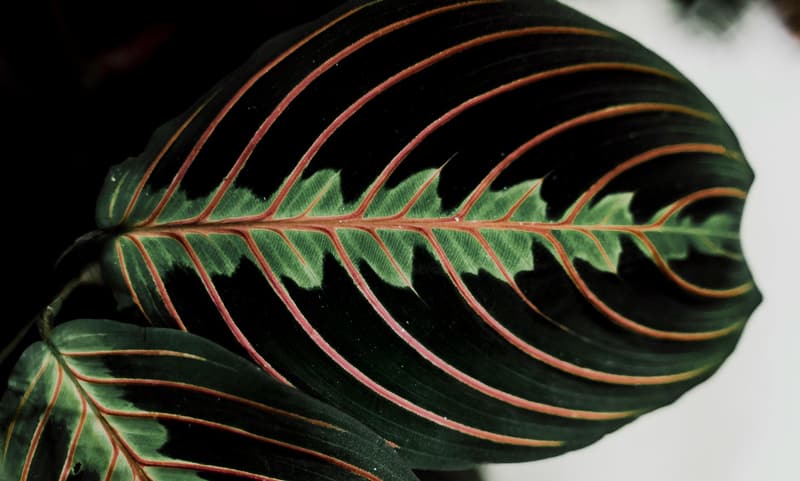
Prayer Plant Care
Maranta leaves lie flat by day and fold upright at night, moved by a small joint at each leaf base. Why that happens, and why it forgives more than a calathea.
Care guide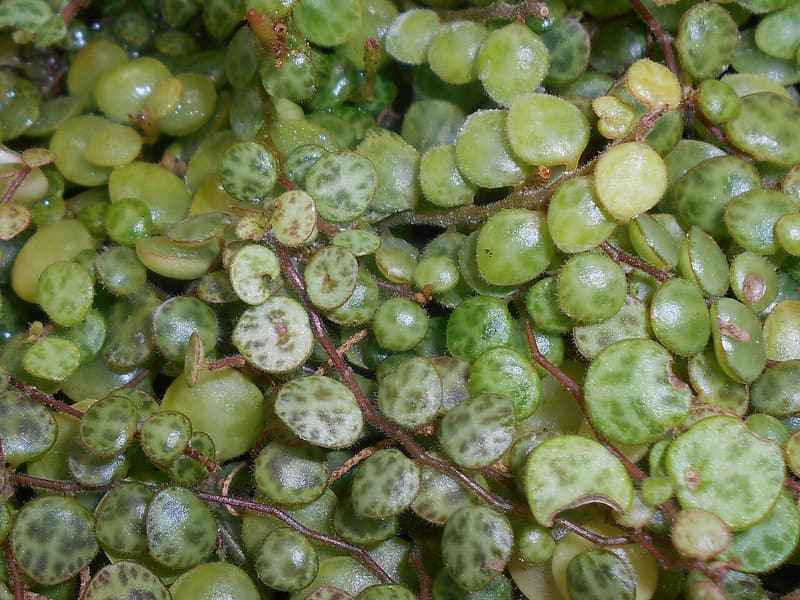
String of Turtles Care
Peperomia prostrata trails only about 30 cm at maturity and rots in soggy mix. Pot size, a damp-not-wet watering routine, humidity and how to root the tiny strands.
Care guide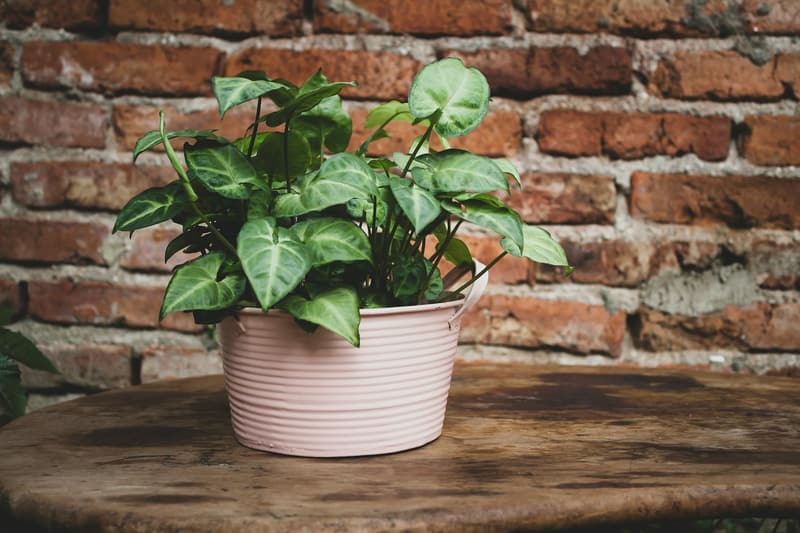
Syngonium Care
Arrowhead plants change leaf shape as they climb, from arrows to lobes to 5–11 leaflets. Keeping the compact juvenile form, or growing the adult one on a pole.
Care guideRelated collections
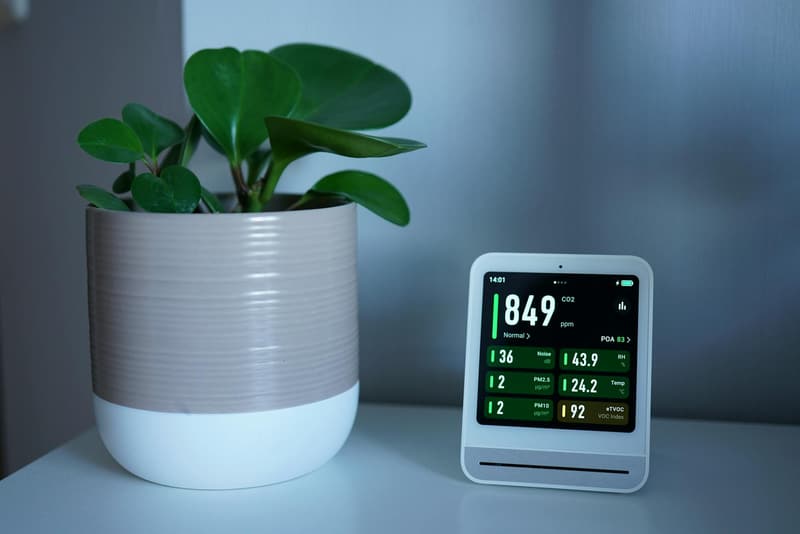
Air-Purifying Plants
Houseplants tested in NASA's 1989 Clean Air Study, what that research did and didn't show for real homes, and how to care for each one.
Read
Low-Light Plants
Nine houseplants that genuinely tolerate low light, from ZZ and snake plant to parlor palm, chosen from their verified care requirements, not marketing labels.
Read
Office Plants
ZZ, snake plant, pothos and other plants that put up with office light, dry air and long weekends without water, picked for toughness over air-purifying claims.
Read
Easy Houseplants
All 28 plants rated Easy on their care pages, sorted by the light they need, with the one mistake that still kills each: usually soil that never dries.
Read