
Care basics
Houseplant Watering 101: When, How Much, and With What Water
Water when the mix is dry to the depth each plant needs: 2 cm for a calathea, 5 cm for a pothos, the whole pot for a ZZ. Then soak, drain and empty the saucer.
- watering
- basics
- beginner
- water quality
- bottom watering
Water by the state of the mix, not the day of the week. A large share of houseplants are lost to over- or underwatering, and watering on a schedule causes both, according to University of Maryland Extension. This page covers the routine: when to water, how, and what water to use. If a plant is already sick, go to overwatering signs and rescue or the wilting and drooping guide.
When to Water: Three Checks
Use whichever suits the pot:
- Finger test. Push a finger into the mix to the depth in the scale below: about 2–3 cm (1 in) is the first knuckle, 5 cm (2 in) is two knuckles. Dry at that depth: water. Cool and damp: wait 2–3 days and check again. Maryland Extension notes that if your finger can’t get 5 cm down, the mix may be compacted or the plant root-bound.
- Weight test. Lift the pot right after a full watering so you know its wet weight. A pot whose mix is dry weighs much less. This is the fastest check for hanging baskets and small pots.
- Chopstick or skewer. For pots deeper than 20 cm, push a plain wooden chopstick to the bottom, leave it 10 minutes and pull it out. Dark, damp wood or clinging mix means there’s still water below where your finger reaches.
Moisture meters are cheap, but most measure electrical conductivity, so fertilizer salts can make dry mix read “moist”. Use one alongside the finger test, not instead of it.
How dry to let it get depends on the plant. Almost every care card on this site uses one of these five steps:
| Care card says | How to check | Plants on this site |
|---|---|---|
| Evenly moist, or top 1–2 cm (½–¾ in) dry | The surface has just lost its dark colour; never let the pot dry out | Calatheas, prayer plant, Boston fern, croton, coleus, English ivy, string of turtles |
| Top 2–3 cm (1 in) dry | First knuckle | Peace lily, spider plant, pilea, Chinese evergreen, dracaena, parlor palm, dieffenbachia, tradescantia, bird’s nest fern, anthurium, Christmas cactus |
| Top 3–5 cm (1–2 in), or the top quarter to third | Whole finger; in a 25 cm (10 in) pot a quarter to a third is 6–8 cm | Pothos, monstera, rubber plant, fiddle-leaf fig, philodendron, schefflera |
| Top half dry | Chopstick | Dracaena marginata, hoya |
| Dry throughout | Chopstick dry to the bottom and the pot light | ZZ plant, snake plant, jade, aloe, string of hearts, string of pearls |
These are depths, not intervals. For most plants the step stays the same all year and what changes is how long the mix takes to get there; where a plant page says to let it dry further in winter (Chinese evergreen, prayer plant), follow the page. A few succulent cards add a rough interval, such as monthly in winter for a snake plant, as a reminder of when to check.
How to Water
Top watering. Pour slowly over the whole surface until water runs out of the drainage hole. Wet the whole root ball, not only the top few centimetres. Missouri Extension’s Caring for Houseplants says to discard any water still in the saucer an hour after watering. Small pots can go in the sink to drain.
Bottom watering. Set the pot in 3–5 cm of water for 15–30 minutes, until the surface of the mix darkens, then lift it out and let it drain. Missouri Extension also describes dunking the pot to just below its rim in a bucket until the top of the mix is moist. Bottom watering is useful for:
- plants with leaves that cover the soil (African violets, string-of-pearls)
- peat mixes that have dried out so far that water runs straight down the sides
- seedlings and freshly potted cuttings
The catch: water only moves up, so dissolved salts stay in the pot and can form a white crust on the surface. Every third or fourth watering, water from the top until it runs through.
Water temperature. Use room-temperature water. Cold water on warm leaves leaves pale rings on African violets, and Missouri Extension recommends room-temperature water to avoid chilling them.
Pot Type Changes the Timing
| Pot | How it dries | What to do |
|---|---|---|
| Unglazed terracotta | Fastest; water evaporates through the walls | Check twice as often in summer; good for succulents and anyone who overwaters |
| Plastic or glazed ceramic | Slower; only the surface and drainage hole lose water | Water less often than terracotta, check the lower half with a chopstick |
| Nursery pot inside a decorative cachepot | Water collects unseen in the outer pot | Lift the inner pot out after watering and tip out what drained |
| Pot with no drainage hole | Water pools at the bottom with no way out | Use it only as a cachepot; don’t plant into it |
| Self-watering pot | A reservoir wicks water up continuously | Suits moisture-lovers; let the reservoir run empty for a few days between refills, and flush from the top monthly |
Pot size matters as much as material. A small plant in a pot several sizes too big sits in a large volume of wet mix its roots can’t reach, which stays wet for weeks. Pot up one size at a time (see repotting). For holidays, the options are in self-watering setups for when you’re away.
Mix Type Changes It Too
- Peat- or coir-based “houseplant compost” holds a lot of water and dries slowly from the bottom up. Once it dries out completely, peat repels water, which then runs down the gap between root ball and pot. Fix it with a 30-minute soak from below.
- Chunky aroid mixes (bark, perlite, some peat) drain in seconds and dry within days; plants in them can be watered more freely.
- Gritty cactus mixes (half grit or pumice) dry fastest of all. Water thoroughly, then wait until the pot is light.
If your finger meets a dense, sticky layer, or water takes more than a few seconds to soak in, the mix has broken down. Repot rather than adjusting how you water.
Water Quality
- Softened water: avoid it. Salt-based softeners swap calcium and magnesium for sodium, and Penn State notes that sodium builds up over time, becomes toxic and breaks down soil structure. In many homes the kitchen cold tap bypasses the softener; use that, or rainwater.
- Fluoride: the same Penn State article reports that fluoride can harm sensitive plants at concentrations as low as 0.1 ppm, and that spider plants show spotted leaves or burned tips. Missouri Extension lists the same tip burn on peace lilies, and dracaenas react the same way. For these, use rainwater or distilled water (see brown leaf tips).
- Chlorine: rarely a problem. Penn State notes that letting water stand overnight lets it dissipate.
- Hard water: fine for most plants, but leaves white crust on pots and soil.
Flush out salts. Fertilizer and hard water leave dissolved salts behind as the mix dries. Maryland Extension recommends leaching every four to six months: scrape off any white crust, then run at least twice the pot’s volume of water through it, let it drain completely, and fertilize afterwards, not before. Leach new plants the first time you water them too.
Seasons
Plants use far less water from late autumn to late winter, when days are short and light is weak. Check at the same depth as in summer; expect it to take twice as long or more to dry there, and never carry the summer interval over. In spring, as new leaves appear, the interval shortens again. Radiators and heating vents dry the top of the mix fast while the lower half stays wet, so use the chopstick in winter.
When It Isn’t the Watering
Several other beginner mistakes look like watering trouble, and watering more or less won’t fix them.
- Too little light. “Tolerates low light” doesn’t mean a dark corner. In dim light a plant uses little water, so the mix stays wet longer and a normal watering routine drowns it. Measure the spot before blaming the watering can (light requirements).
- Hot direct sun. A plant grown in a shaded greenhouse scorches on a sunny sill behind glass. Bleached or crisp patches are sunburn, not thirst. Move sun-lovers like jade and aloe into direct sun over a week or two. Scorched patches never heal, but new leaves will be fine (light problems).
- Dry air. Brown tips and edges on calatheas, ferns and prayer plants often mean low humidity, not a missed watering. A humidifier next to the plants works; pebble trays barely change the air (humidity problems).
- One bag of compost for everything. Orchids need a bark mix, and succulents a gritty one. Potting a moth orchid into houseplant compost keeps its roots wet however carefully you water.
- Repotting at the wrong time. A new plant doesn’t need repotting because the nursery pot looks plain. Repot in spring, and only when roots circle the pot or come out of the drainage holes (repotting).
- Skipping quarantine. Pest eggs are too small to see in the shop. Keep a new plant in another room for 3–4 weeks before it joins the others (pest identification).
Frequently asked questions
How often should I water my plants?
There's no fixed interval. The same pothos may need water every 5 days in a sunny summer window and every 3 weeks in a dim winter room. Check the mix to the depth on the plant's care card, or lift the pot, and water when it's dry there and the pot feels light.
Is bottom watering better than top watering?
Neither is better for the plant. Bottom watering wets a dried-out root ball evenly, but it leaves fertilizer salts behind, so flush the pot from the top every few waterings.
Is tap water okay for plants?
For most plants, yes. Avoid water from a salt-based softener, which adds sodium. Fluoride-sensitive plants such as spider plants and dracaenas may get brown tips on fluoridated water; rainwater or distilled water avoids that.
How much water should I give a plant?
Enough that water runs out of the drainage hole, then let it drain and tip out the saucer. A little water often keeps the top wet and the bottom dry, which is the worst of both.
Should I mist my plants instead of watering?
No. Misting wets the leaves for a few minutes and does nothing for the roots. Water the mix.
Related guides
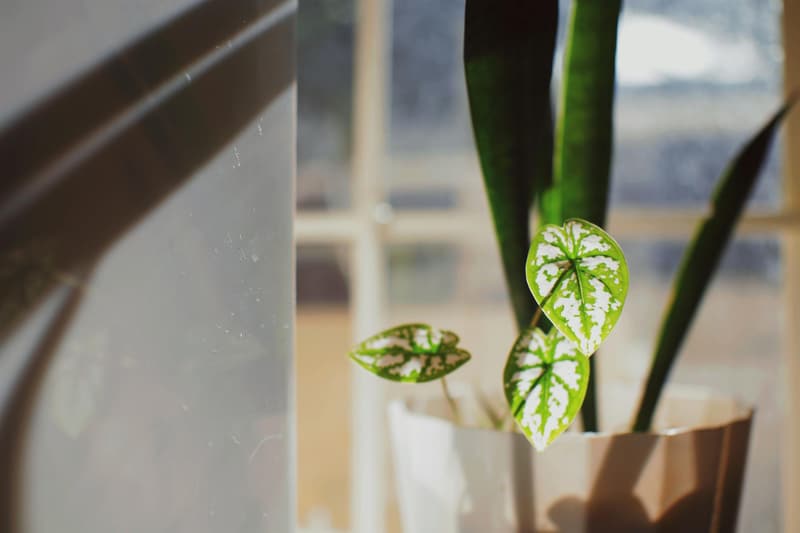
Plant Light Requirements
Low light means 50–250 foot-candles, not a dark corner. Window direction, a phone light-meter check and grow-light height and hours, in one reference page.
Read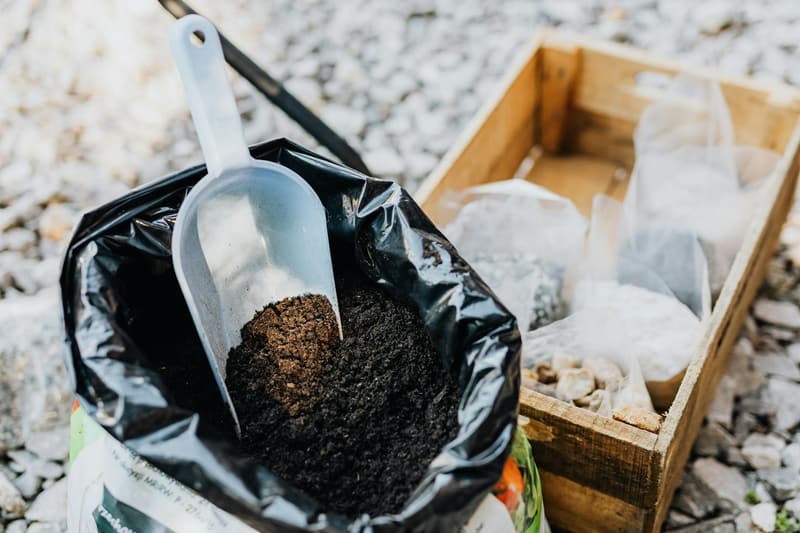
Fertilizing Houseplants
All-purpose feed at half or quarter strength, none for dormant or freshly repotted plants. A dilution table, a seasonal schedule and how to flush out salt.
Read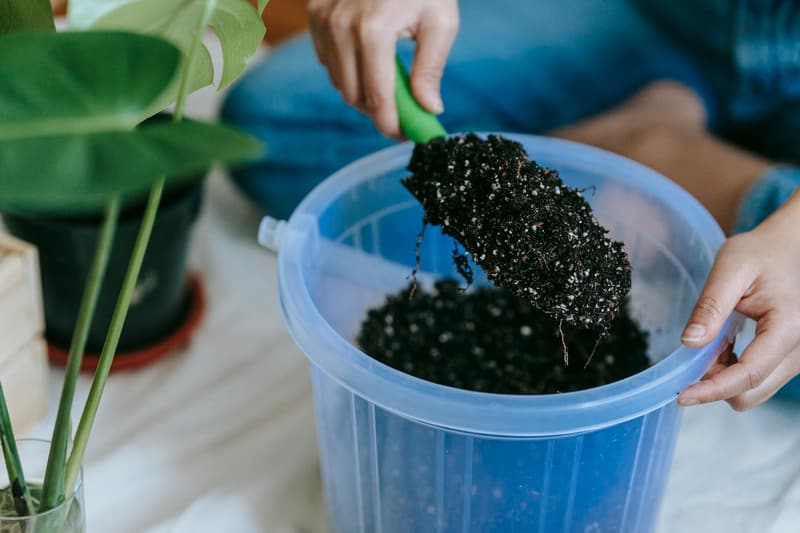
How to Repot a Houseplant
Go up no more than 5 cm (2 in) in pot width, skip the gravel layer and moisten the mix first. The signs it's time, which mix suits which plant, and each step.
Read
Brown Leaf Tips
Fluoride in tap water browns the tips of dracaenas, spider plants and peace lilies. Rule it in or out against dry air and salts, then trim without new browning.
Read